
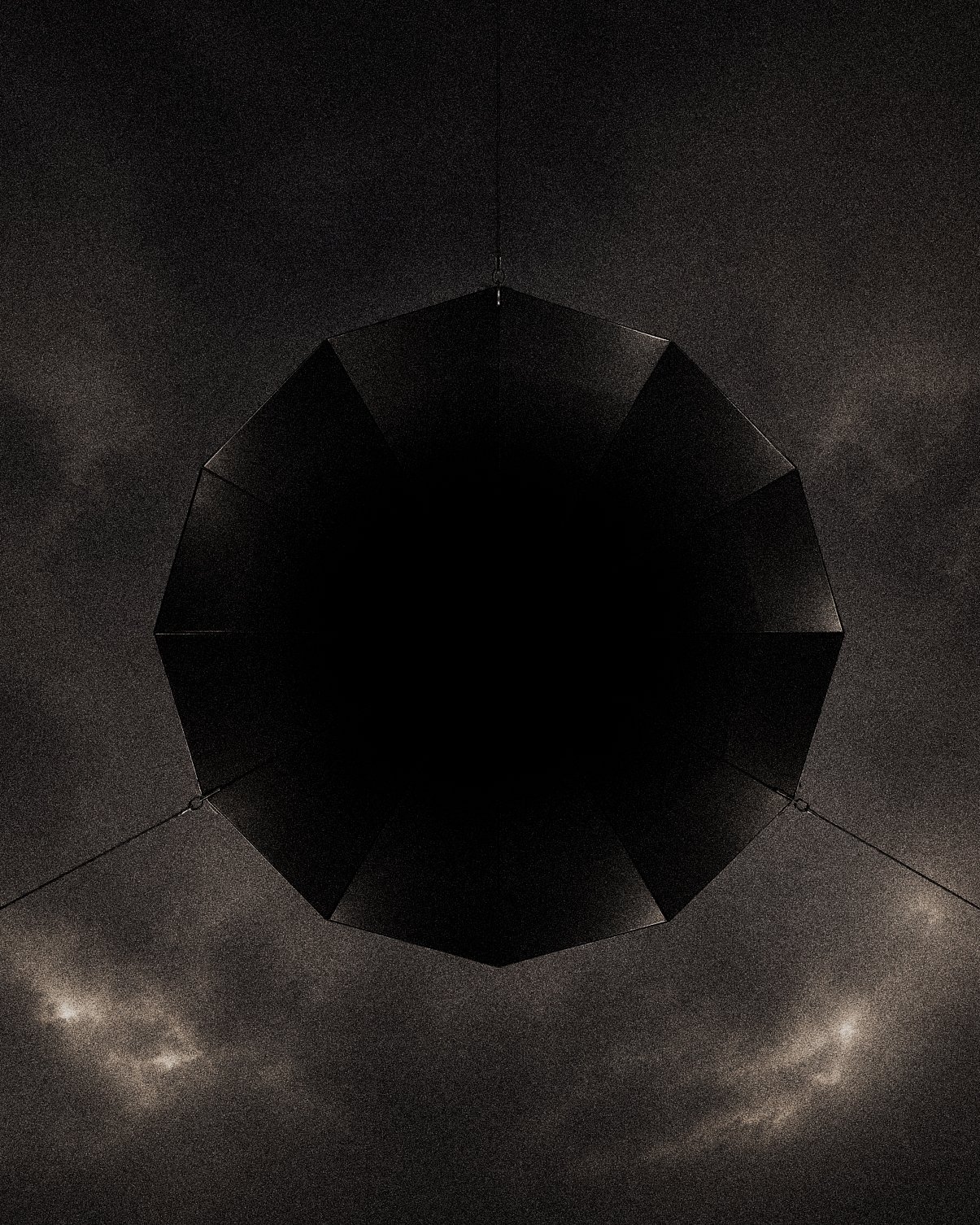
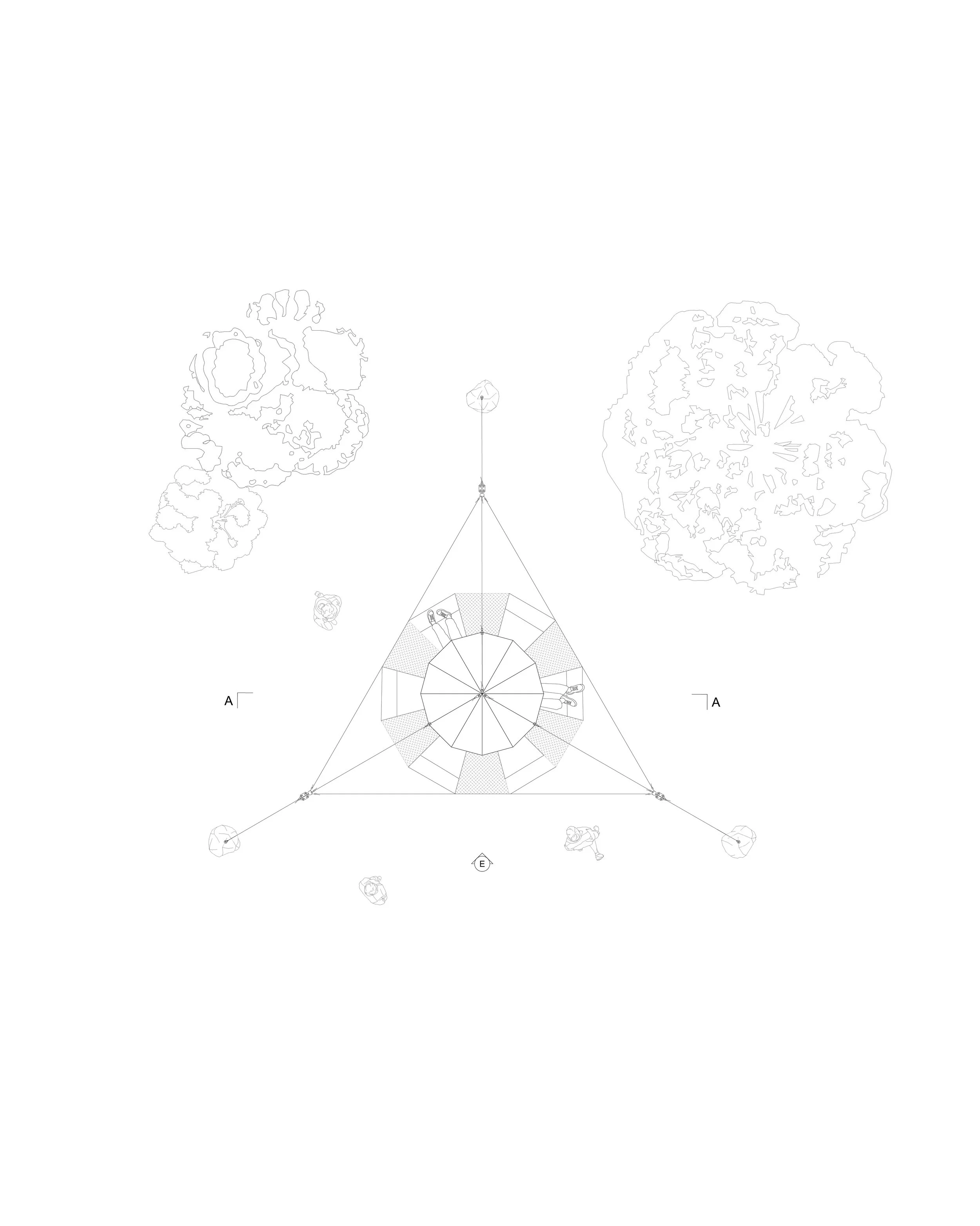
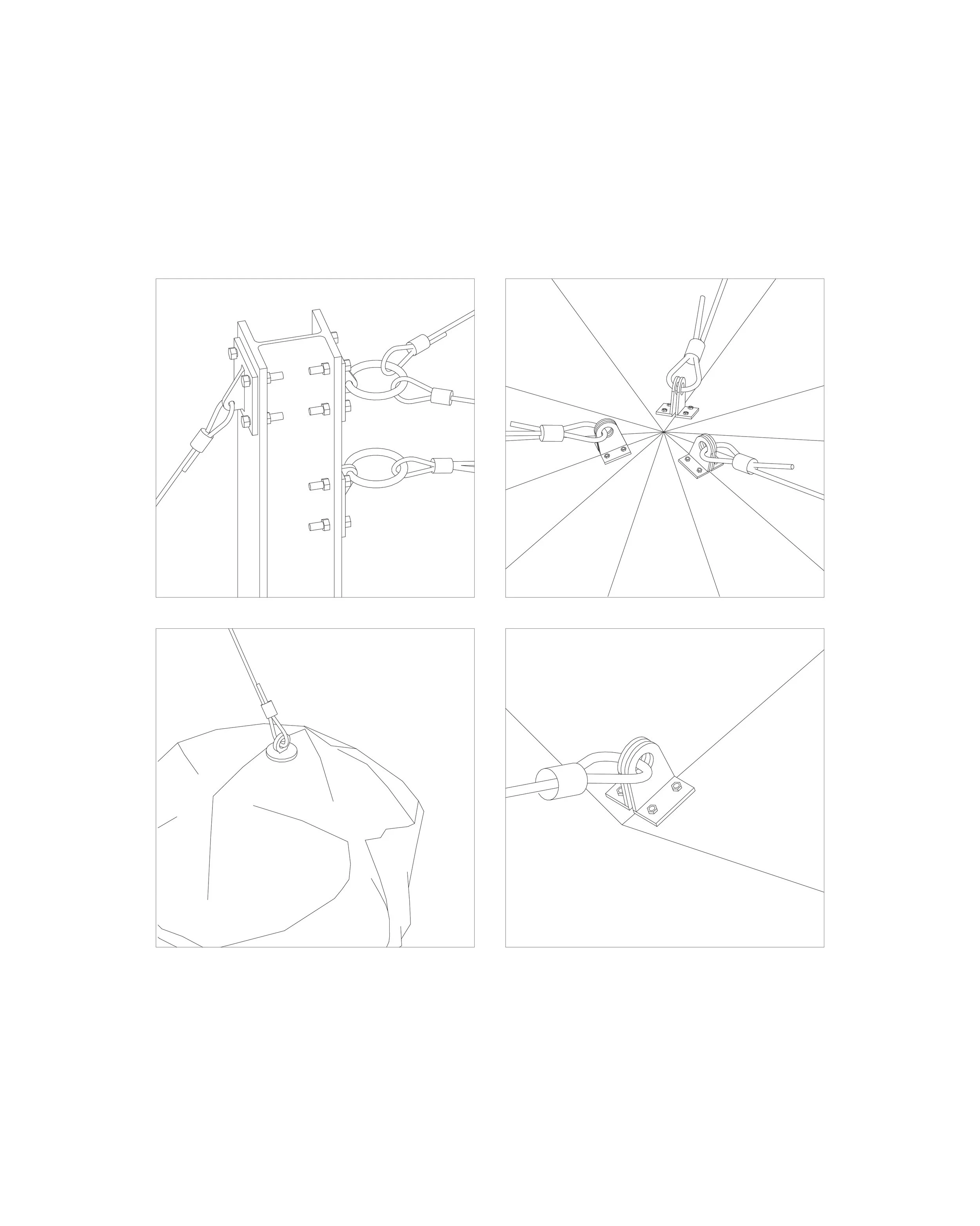
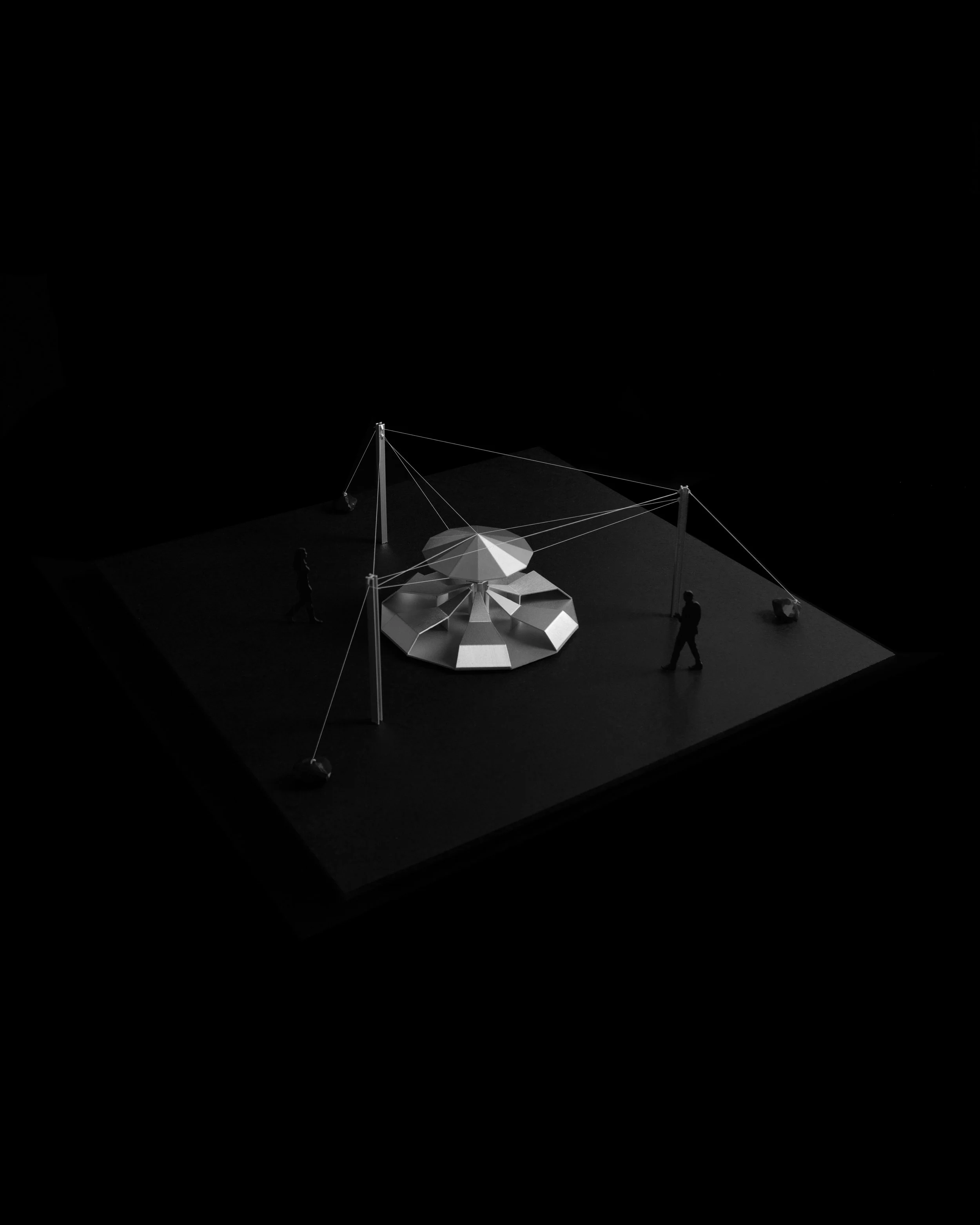
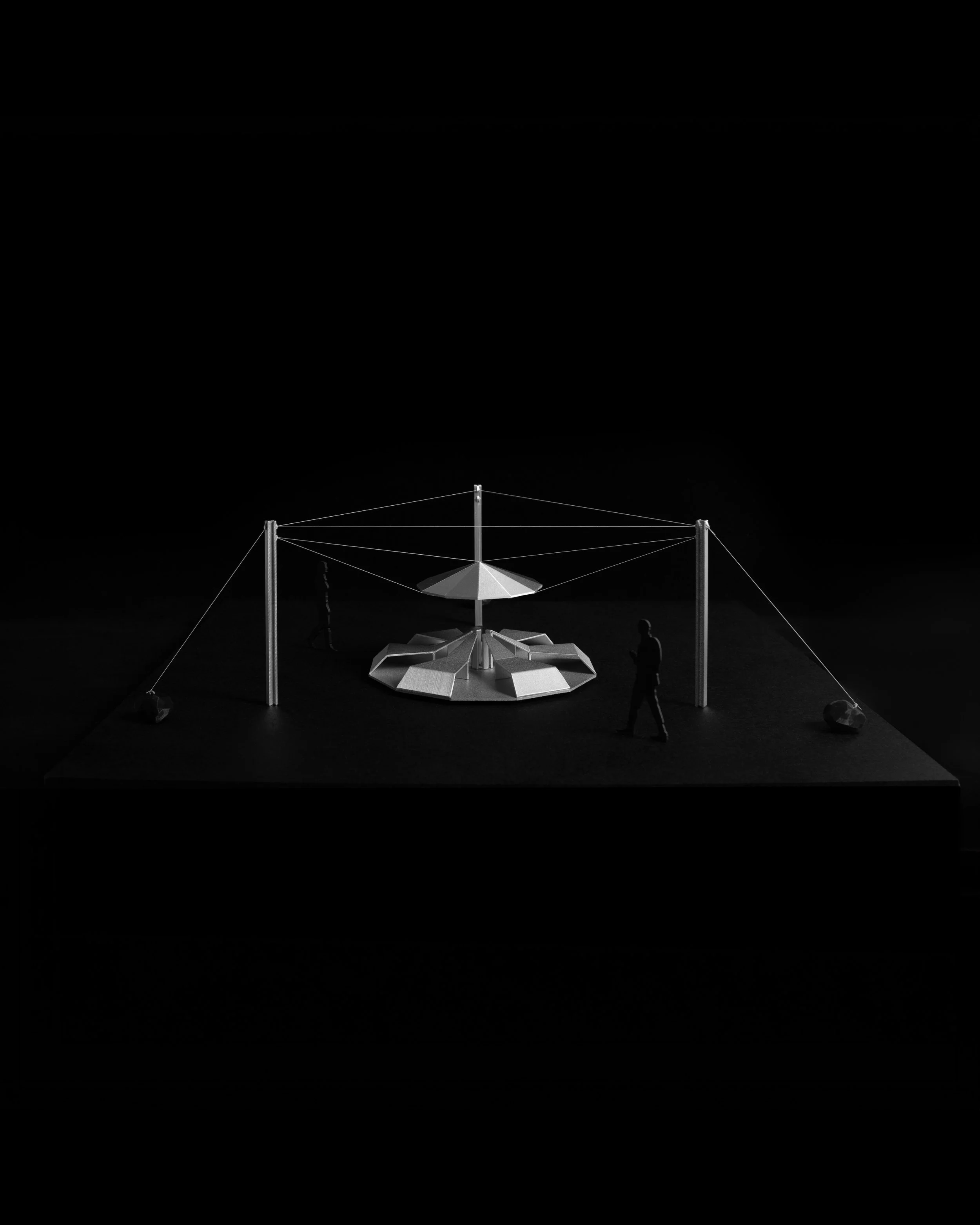
In a nocturnal urban landscape defined by the omnipresence of artificial light, Attrition proposes a confrontation with darkness. The installation explores a future in which artificial illumination is no longer continuous, but becomes increasingly fragmented due to material scarcity, ecological necessity, or a societal choice towards luminous sobriety. Darkness would no longer be perceived as an absence or as a deficiency, but as a spatial, perceptual, and ecological resource to be preserved.
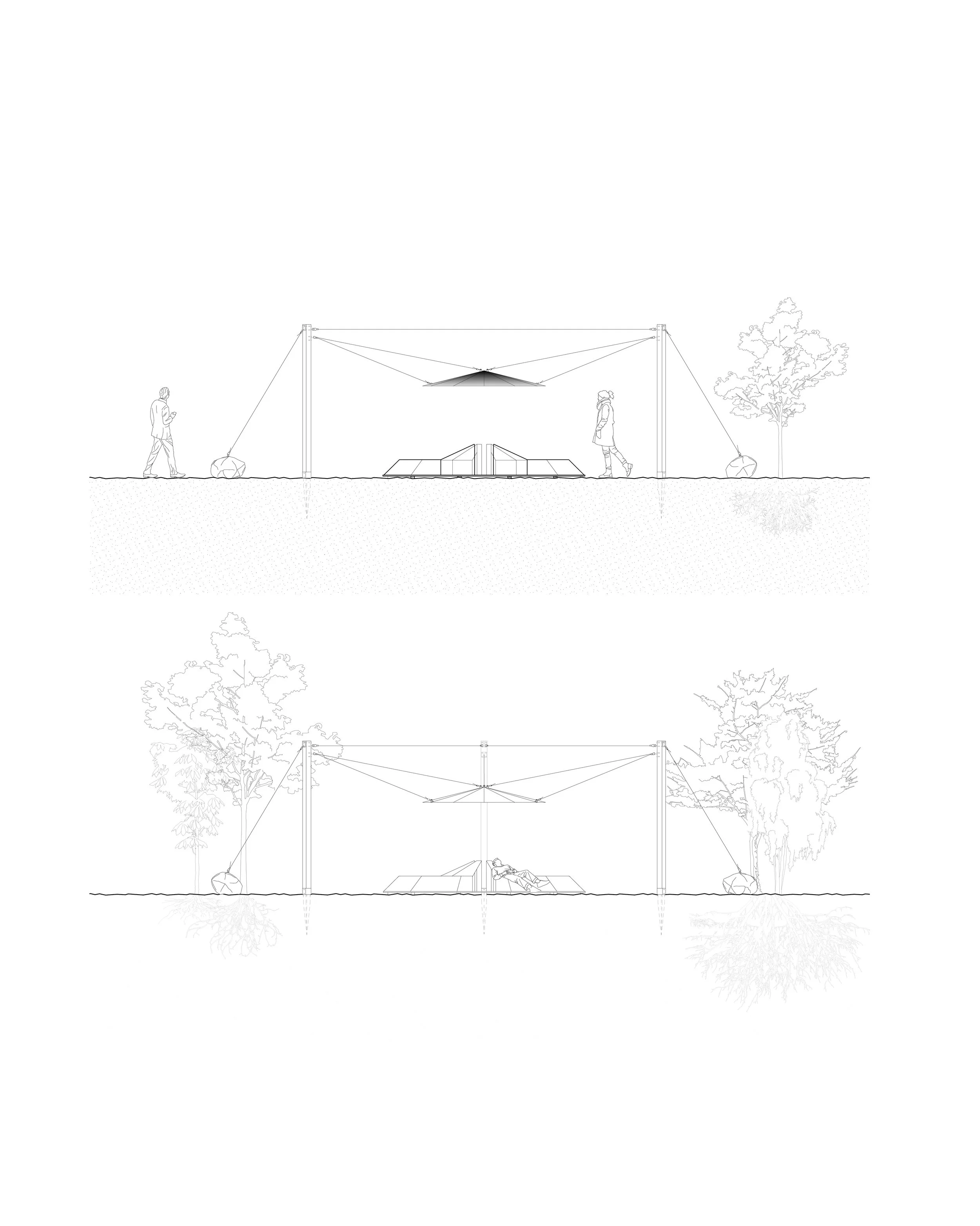
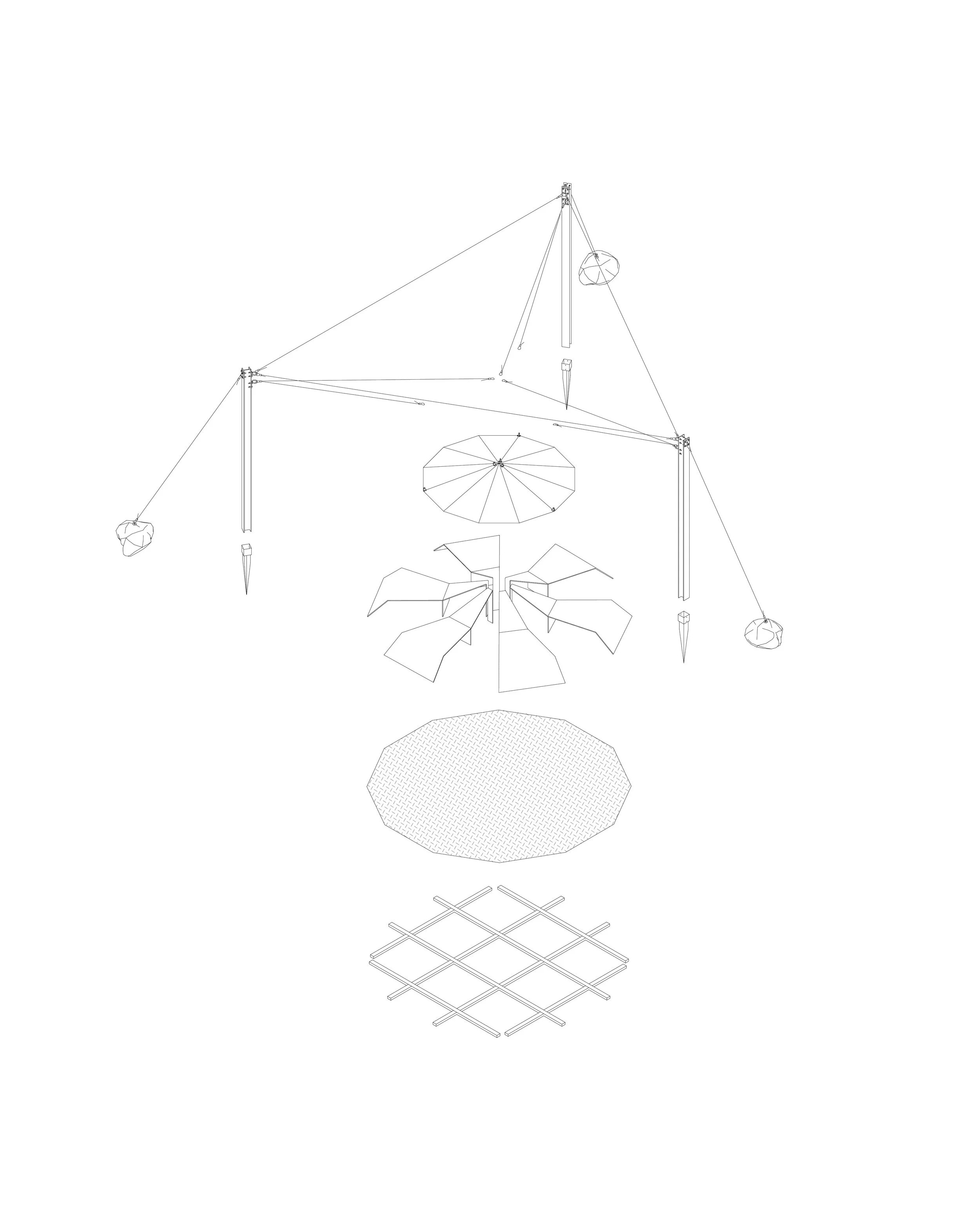
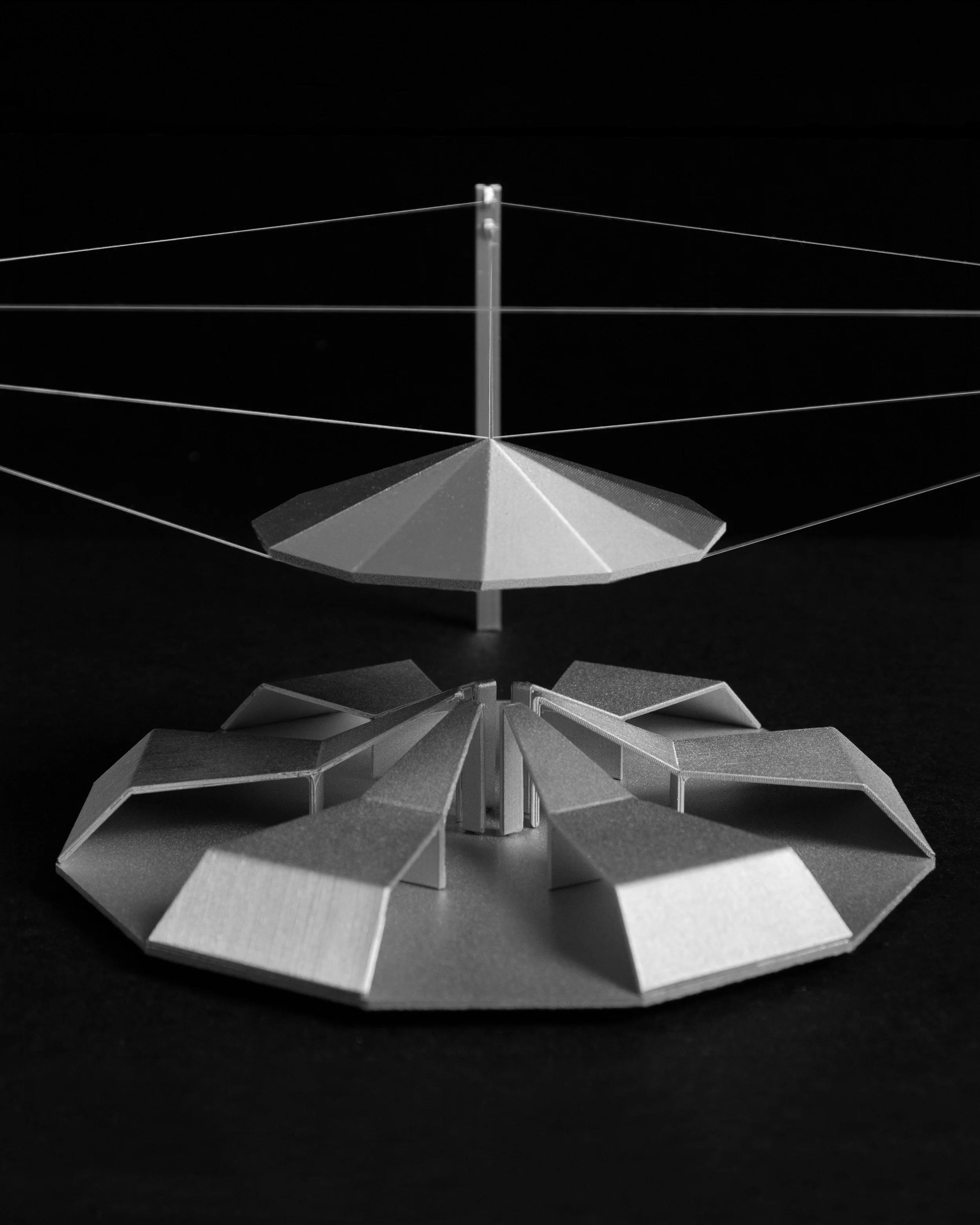
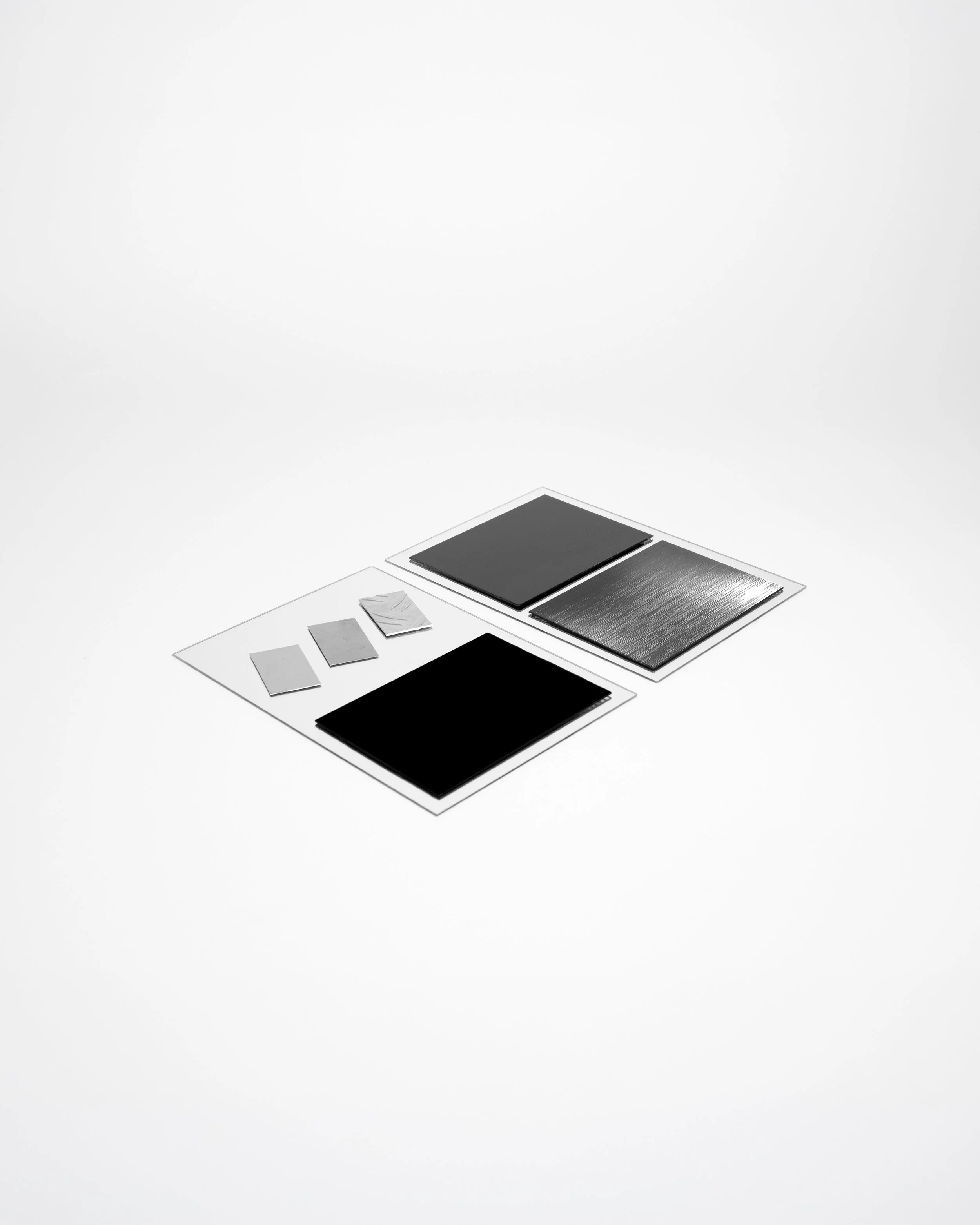
Rather than emitting light, Attrition absorbs it. A suspended stainless steel dome, gradually coated with light-absorbing finishes, culminates in an ultra-black surface at its center, capable of trapping nearly all incident light. As reflections disappear, the perception of depth and materiality dissolves. The dome creates the illusion of a void and contrasts with the light-polluted sky. The effect is intensified through the use of reflective surfaces around and beneath it that capture, reflect, and redirect light pollution.
Visitors are invited to lie down beneath the dome and confront to a "bath of darkness". This contemplative experience transforms darkness from an intangible absence into an almost physical presence.
Situated at Jardin Anglais in Geneva, Switzerland, Attrition draws upon the very light pollution it seeks to question. In a context where nocturnal installations are traditionally conceived to emit light, it proposes the opposite gesture and questions our dependence on an endlessly illuminated city. Ultimately, it invites us to reconsider darkness not as the negation of light, but as an essential condition of our spatial experience.
Spatial design by Aurèle Eliseo Stauffer
Valentin Calame, Philippe Rahm Architectes
For Geneva LUX Festival
Geneva, Switzerland, 2026